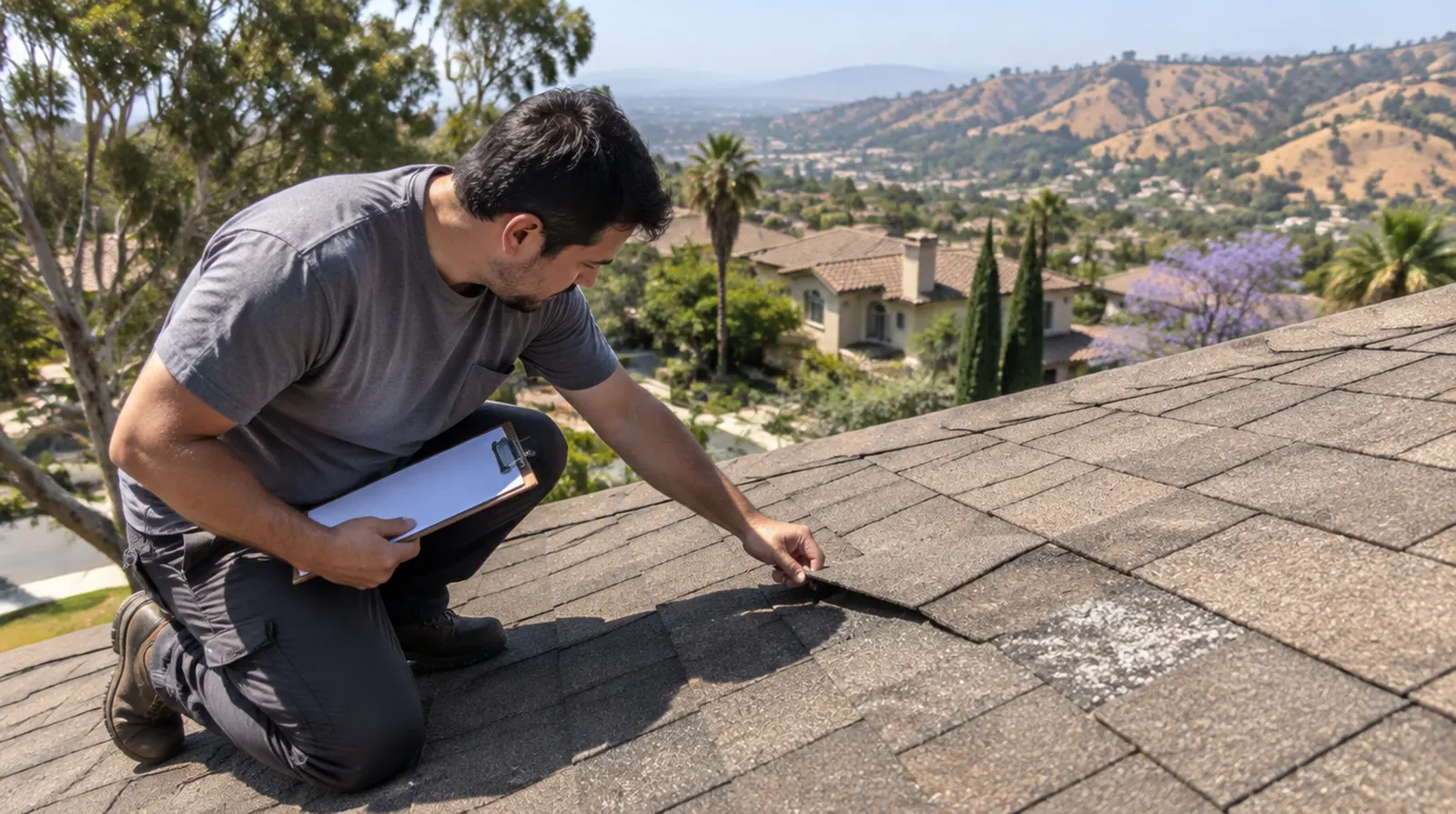
What our roof inspection covers
We walk every roof level, not just the main slope visible from the street. On concrete tile, we check for cracked, slipped or missing pieces, hip and ridge attachment, and signs of failing underlayment, such as exposed or brittle felt at valleys and edges. On shingles, we look at curling, cracking, granule loss and lifted tabs. Low-slope sections over patios and decks are checked for seams, blisters and ponding.
Flashing gets close attention, especially where stucco walls meet lower roofs, a common leak point on hillside homes. We inspect chimneys, skylights, vent pipes and solar mounts. Gutters and downspouts are checked for how well they carry water away from slopes. In the attic, we look for stains, daylight and damp insulation, and evaluate ventilation.
For more context on what this kind of visit should include, here is a guide to an attic-and-roof inspection.
When to book a roof inspection
- During escrow on a home purchase
- Before listing a home for sale
- After Santa Ana winds or a heavy storm
- Before the rainy season
- When you notice stains, debris or out-of-place tile
How the inspection unfolds
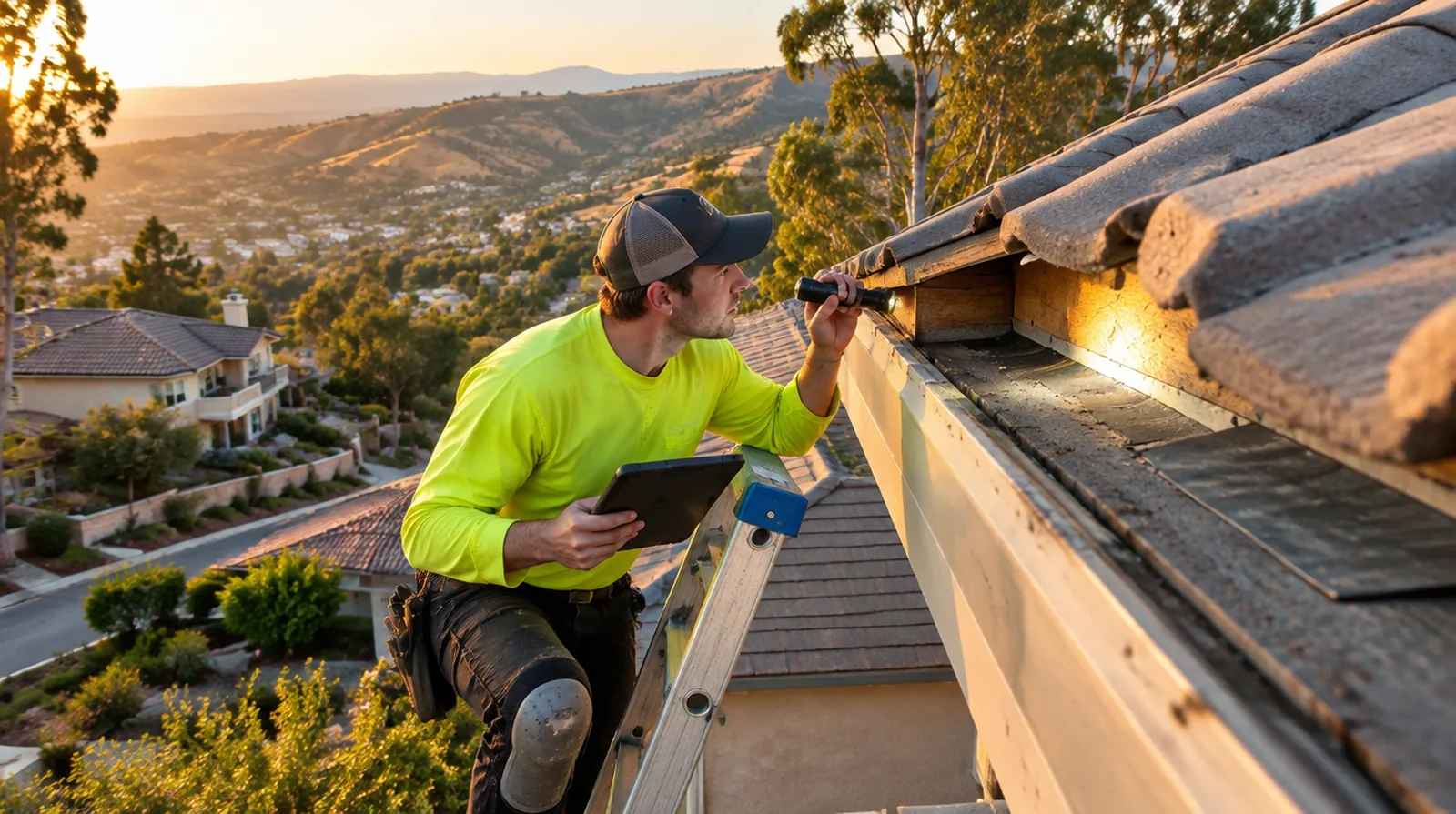
We start by walking the property to understand the roof layout, including lower levels that may only be visible from the backyard. Then we go up and work section by section, photographing as we go. Inside, we check any stains you have noticed and go into the attic if it is safe.
Afterward, you receive a written report with photos, grouped by urgency. If you want a repair or replacement price, we can include one, with no obligation.
Why tile roofs need closer inspection
Concrete tile can last a very long time, but the underlayment beneath has a shorter life. Many Diamond Bar tile roofs are now old enough that the underlayment may be nearing the end of its service life, even when the tile looks fine. An inspection checks underlayment condition at accessible points, giving you an early warning before leaks start.
Inspections for buyers
General home inspectors often view the roof from the ground or a ladder. We walk every level and check the attic, giving buyers a clearer sense of remaining roof life, upcoming repairs and whether a tile reset or replacement may be needed soon. That information helps in conversations with the seller and your insurer.
Inspecting multi-level roofs
Split-level and hillside homes often have lower roofs that are invisible from the street and sometimes from the backyard too. We access each level, because a lower roof that collects runoff from above is often in worse shape than the main slope. Walls where levels meet, and the gutters and downspouts that drain one roof onto another, get extra attention.
What your inspection report includes
Each finding comes with a photo, a description and its location on the house. We note what should be handled before the rainy season, what to monitor and what is in good shape. You are free to share the report with an agent, another contractor or your insurer.
Inspections after Santa Ana season
Strong offshore winds can shift ridge tiles and lift shingle edges without leaving anything obvious in the yard. A check once the winds settle, before the first storm, catches that damage while it is still a quick fix. We also look for wind-blown debris jammed into valleys and gutters, which can dam water when rain arrives.
Buyers and sellers in Diamond Bar often request an inspection during escrow. We can schedule quickly and write findings in plain language so everyone at the table understands the roof's condition and what, if anything, it needs.
Roof inspection FAQs
How long does an inspection take?
About an hour for most homes, longer for large or multi-level roofs.
Will you walk on my tile?
Yes, carefully. We know where to step to minimize breakage.
Do I need to be there?
It helps but is not required.
Can you inspect around solar panels?
Yes. We check mounts and nearby roofing without moving the panels.
Want a clear read on the roof?
Call (909) 324-6458 to schedule a roof inspection in Diamond Bar.