When roof replacement is the right call
- Leaks appearing in several rooms
- Underlayment that crumbles when tile is lifted
- Shingles curling, cracking or bare across large areas
- Soft or sagging decking
- Repeated repairs that do not hold
- Old wood shake still present under another layer
If you are unsure, a roof inspection will tell you where things stand before any decisions are made.
Our roof replacement process
Planning. We measure the roof, help you choose material, profile and color, and handle HOA documentation if your community requires approval. We pull the permit and confirm fire-rating and energy code requirements for your address.
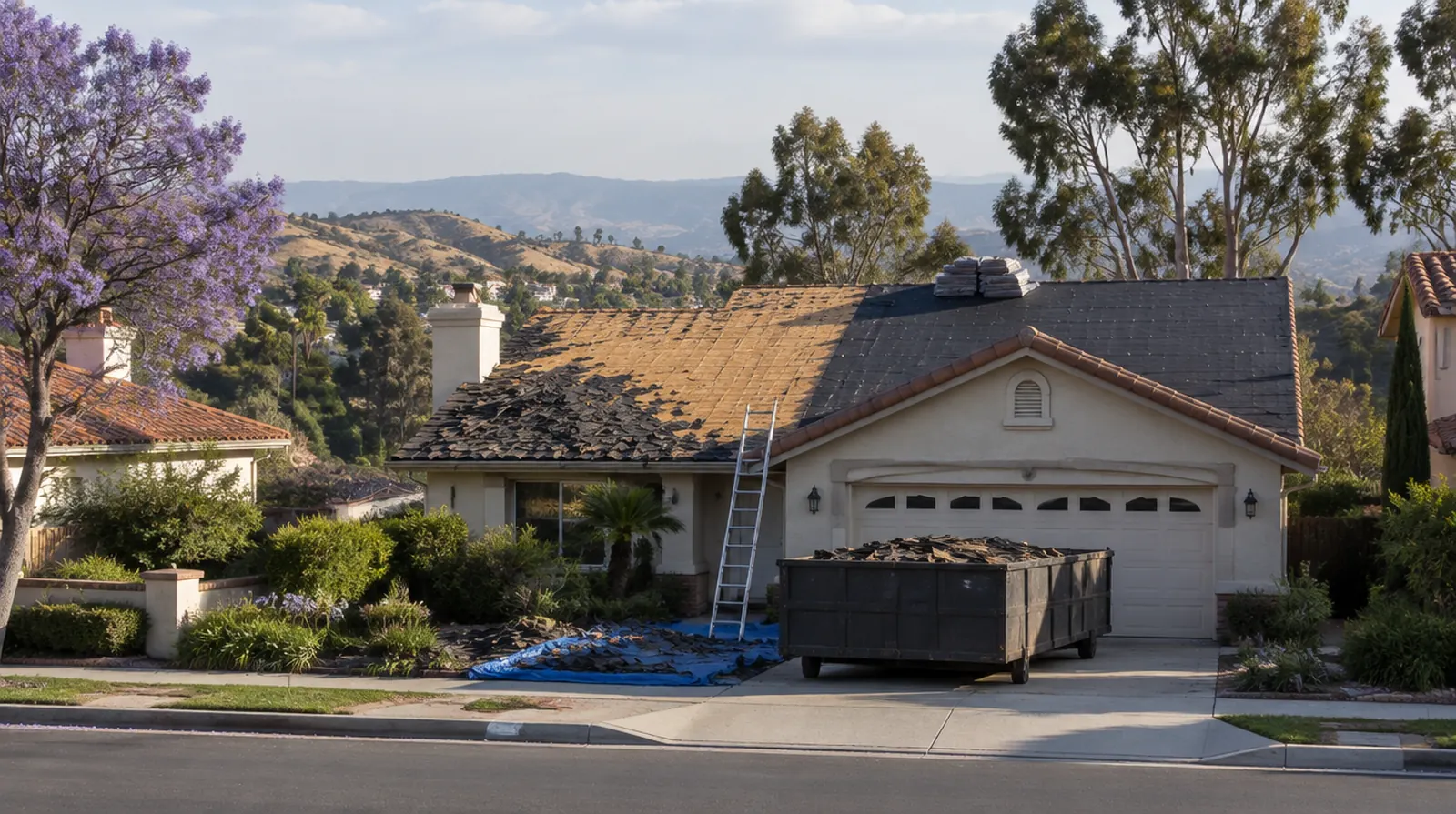
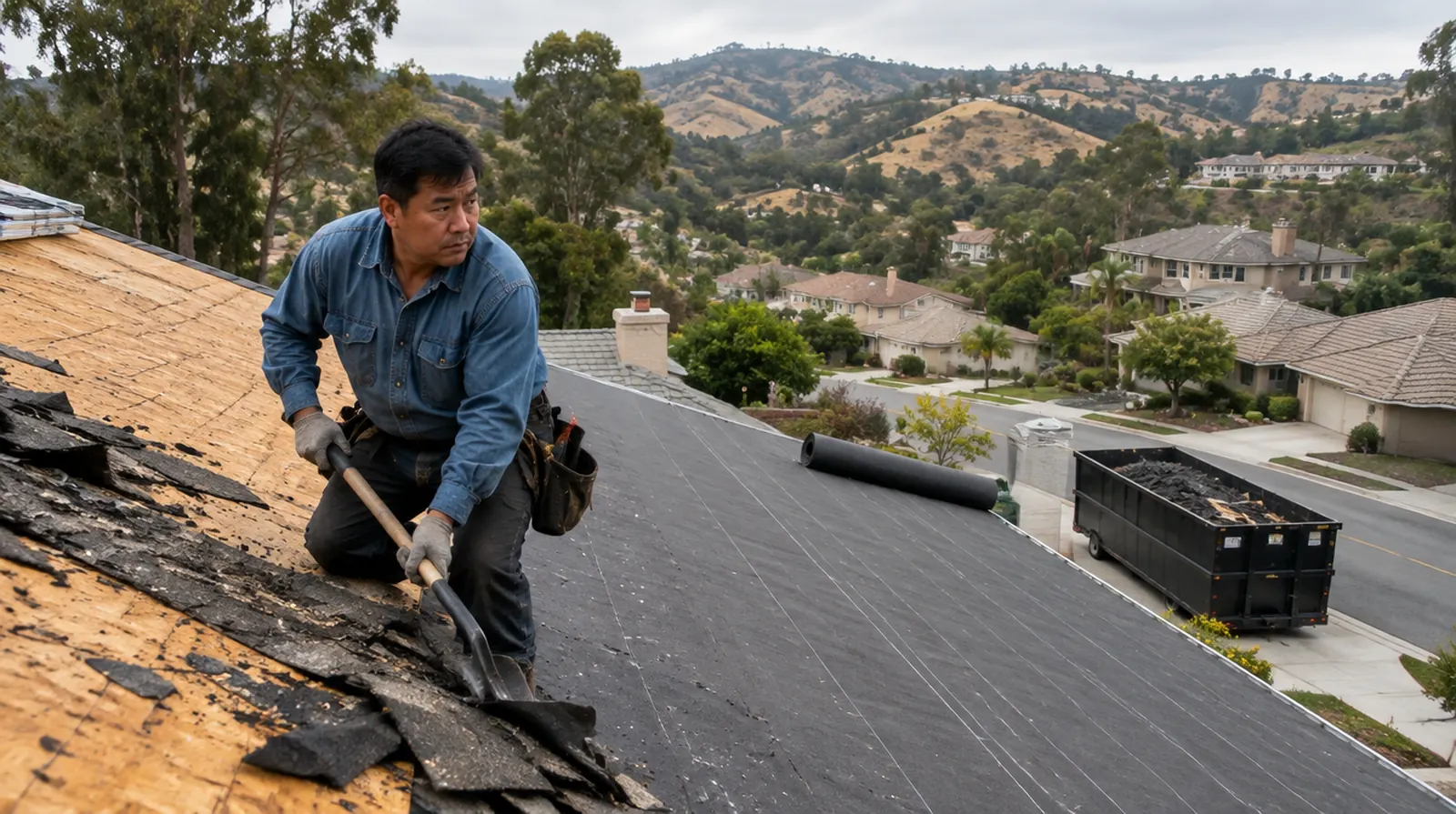
Tear-off. Old roofing comes off down to the deck. On tile roofs, we can salvage tile for reuse if it is in good shape and you want to keep the look. On hillside lots, we plan the drop zone and dumpster placement carefully to protect retaining walls, landscaping and steep driveways.
Deck repair. With the deck exposed, we check every sheet. Homes that once had wood shake may have spaced skip sheathing, which we cover with solid plywood. Soft or damaged wood is replaced.
New system. Underlayment goes on first, followed by drip edge, valley metal and flashing at walls, chimneys and penetrations. Then tile, shingles or membrane go on, with ridge and hip pieces and vents. Fire-resistant vents are used where required.
Cleanup. We remove all debris, sweep for nails and walk the finished roof with you.
Tile reset versus full replacement
On many concrete tile roofs, the tile itself is still sound while the underlayment has failed. In that case, a tile reset is an option: we remove the tile, replace the underlayment and flashing, and reinstall the original tile with new pieces where needed. It preserves the look and can cost less than new tile. If the tile is brittle or the profile is no longer acceptable to your HOA, new tile or a switch to shingles may make more sense.
Choosing materials for Diamond Bar
Concrete tile is durable and common in the city, though it is heavy. Architectural shingles are lighter, faster to install and available in fire-rated versions. Some homeowners move from tile to shingles to reduce weight on aging framing or to lower cost. We explain how each option handles heat, wind and fire exposure, and how each fits your community's standards.
Replacement cost factors
- Roof size, pitch and number of levels
- Material choice and whether tile is reused
- Deck repairs and new sheathing
- Access on hillside lots
- Fire-rated vents and code details
Your estimate lists each item.
Hillside staging for a roof replacement
Steep driveways and terraced lots change how a replacement is run. Tile and shingle deliveries may need a smaller truck or a conveyor, and the dumpster may sit on the street with a permit rather than in the driveway. Debris chutes keep old material from tumbling down slopes. We figure all of that out during the estimate so there are no surprises on day one.
Paperwork when the job is done
You receive the closed permit and product documentation for the materials installed. Keep these with your home records for insurance and resale.
Neighbors on terraced streets
On tightly stacked hillside streets, the house below yours can catch debris from a careless tear-off. We net and tarp downslope edges, keep chutes closed and check neighboring yards before leaving each day.
Roof replacement FAQs
How long does a replacement take?
It depends on size and material. Tile jobs take longer than shingle jobs. We give you a schedule up front.
Can I keep my tile?
Often, through a tile reset, if the tile is in good condition.
Will my HOA need to approve the roof?
Many communities require it. We provide product details for the application.
Do I need to move out?
No. Most families stay home.
Planning a roof replacement?
Call (909) 324-6458 for a free on-roof estimate and a written scope.