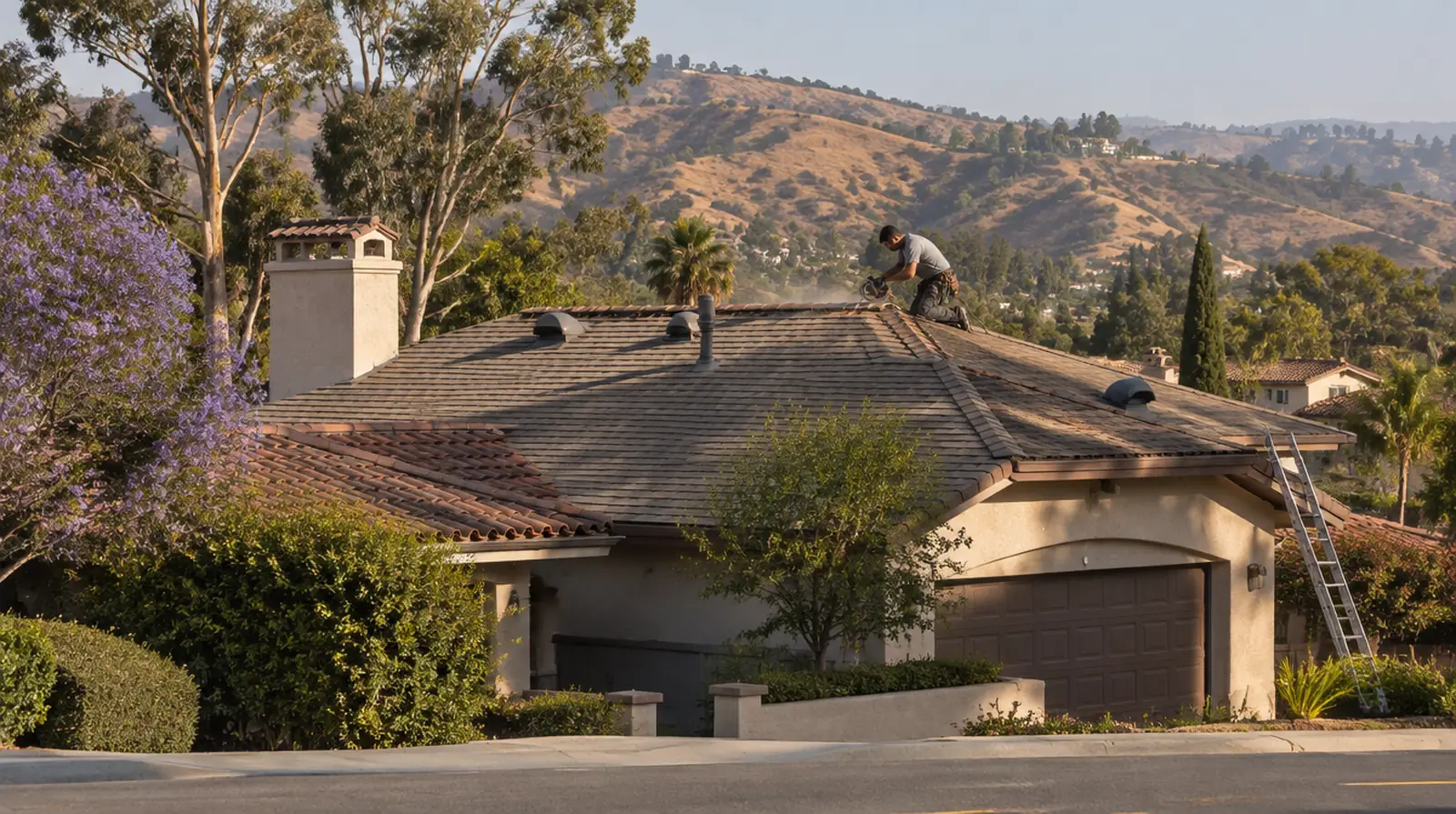
What roof ventilation does
A ventilated attic draws air in at the eaves and lets it out near the ridge. That steady flow carries heat away before it can bake the deck, and it removes moisture before it condenses. Balanced ventilation helps shingles and underlayment last, keeps upper rooms more comfortable and protects the roof structure.
Many Diamond Bar homes were built with limited ventilation, and later insulation upgrades sometimes blocked soffit vents. Multi-level homes may have several separate attic spaces, each needing its own airflow.
Signs you need better ventilation
- An extremely hot attic on summer afternoons
- Upstairs or bonus rooms that stay hot at night
- Shingles aging faster than expected
- Stains or mildew on the underside of the deck
- Only a few small vents on a large roof
How we improve ventilation
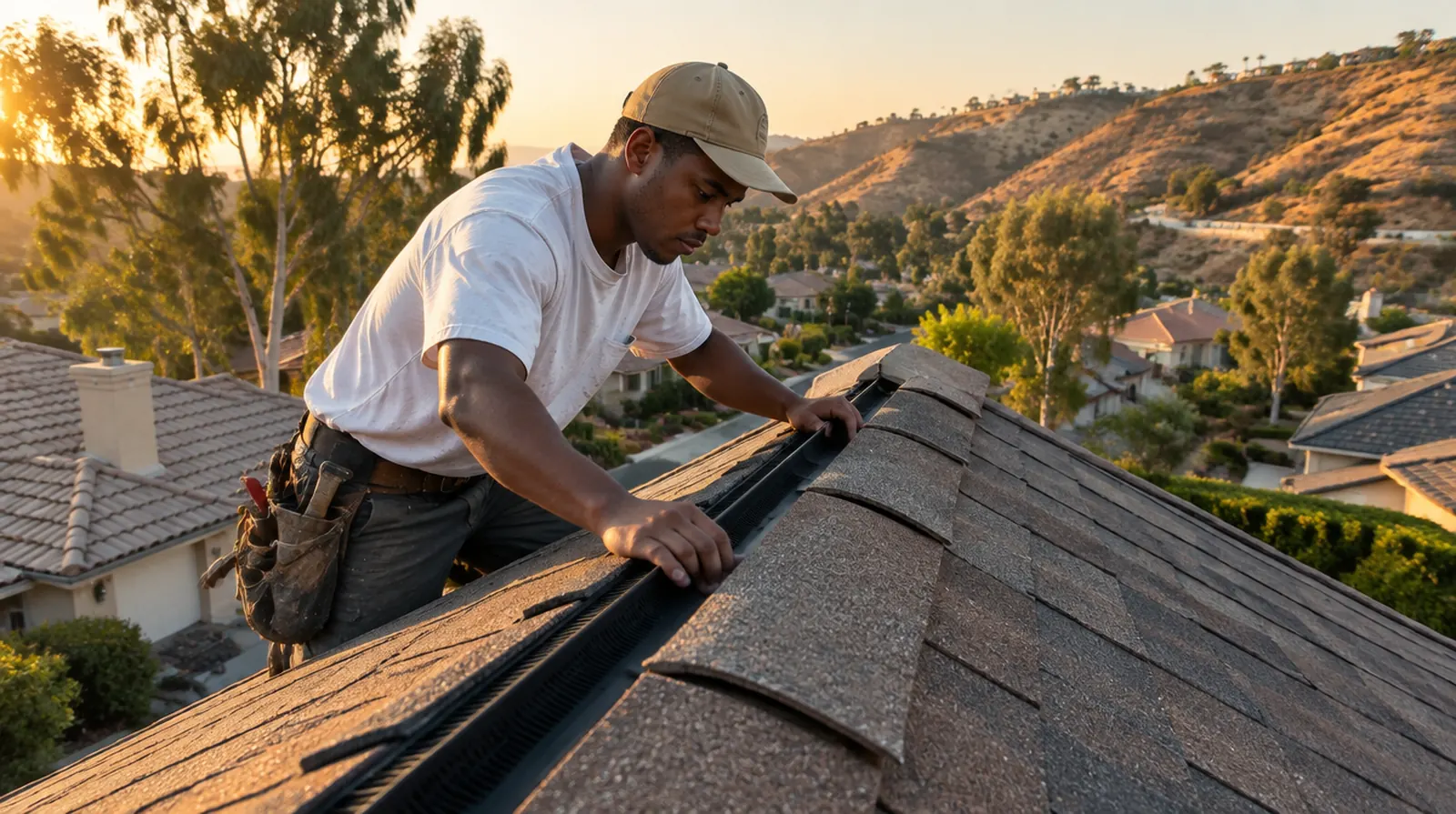
We start in the attic, checking intake and exhaust and whether insulation blocks the eaves. Then we design a system that moves air from soffit to ridge in each attic space.
On shingle roofs, a continuous ridge vent is often the best exhaust, and the easiest time to add one is during asphalt shingle replacement. On tile roofs, we use vents designed for the tile profile. At the eaves, we open or add soffit vents and install baffles. Ventilation does not stop leaks; for that, see our leak repair service.
Fire-resistant vents
Embers carried by wind can enter attics through standard vents. In designated fire hazard zones, California rules call for vents that resist ember intrusion. Even outside those zones, homes near open hillsides benefit from them. We install ember-resistant soffit and roof vents where they are required or requested.
Balanced airflow
Too much exhaust and too little intake can pull cooled air from the house through ceiling gaps. Mixing exhaust types can short-circuit airflow so parts of the attic stay hot. We design one clear path from eaves to ridge for each attic space.
Bonus rooms and split-levels
Rooms over garages and split-level sections often have small, separate attic spaces or none at all, with the ceiling right under the roof. These are usually the hottest rooms in the house. Where there is a cavity, we add dedicated intake and exhaust. Where there is not, we discuss options such as a reflective roof surface.
Ventilating tile roofs
Concrete tile adds a small air space above the underlayment, but the attic beneath still needs its own intake and exhaust. On tile roofs, we use off-ridge or ridge vents made to fit under the tile profile, with flashing that sheds water around them. During a tile reset, we can add or upgrade vents while the tile is off, which is the most efficient time to do it.
When to schedule ventilation work
The best time is during a re-roof or tile reset. Still, soffit openings, baffles and many roof vents can be added any time, and doing it before summer lets you feel the difference right away.
Ventilation and comfort upstairs
Two-story and split-level homes collect heat on the top floor. A well-ventilated attic keeps the ceiling above those bedrooms cooler, so the air conditioner does not have to fight the roof all afternoon and evening. Pairing ventilation with sealed ceiling gaps and adequate insulation gives the best result.
Signs your attic needs better airflow
Very hot upstairs rooms, shingles that curl early, rust on nail tips in the attic and a musty smell after rain all point to poor ventilation. We check intake and exhaust, measure the attic area and show you what balanced airflow would look like for your home.
Roof ventilation FAQs
Can ventilation be added without a new roof?
Yes. Many improvements can be made to an existing roof.
Should I add a powered attic fan?
Not usually. Without enough intake, fans pull air from the house. Passive ventilation comes first.
Are ember-resistant vents required?
In designated fire hazard zones, yes. We confirm requirements for your address.
Will better ventilation lower my bills?
A cooler attic helps, though insulation and ductwork matter too.
Want the attic to breathe?
Call (909) 324-6458 for a roof ventilation look and estimate.