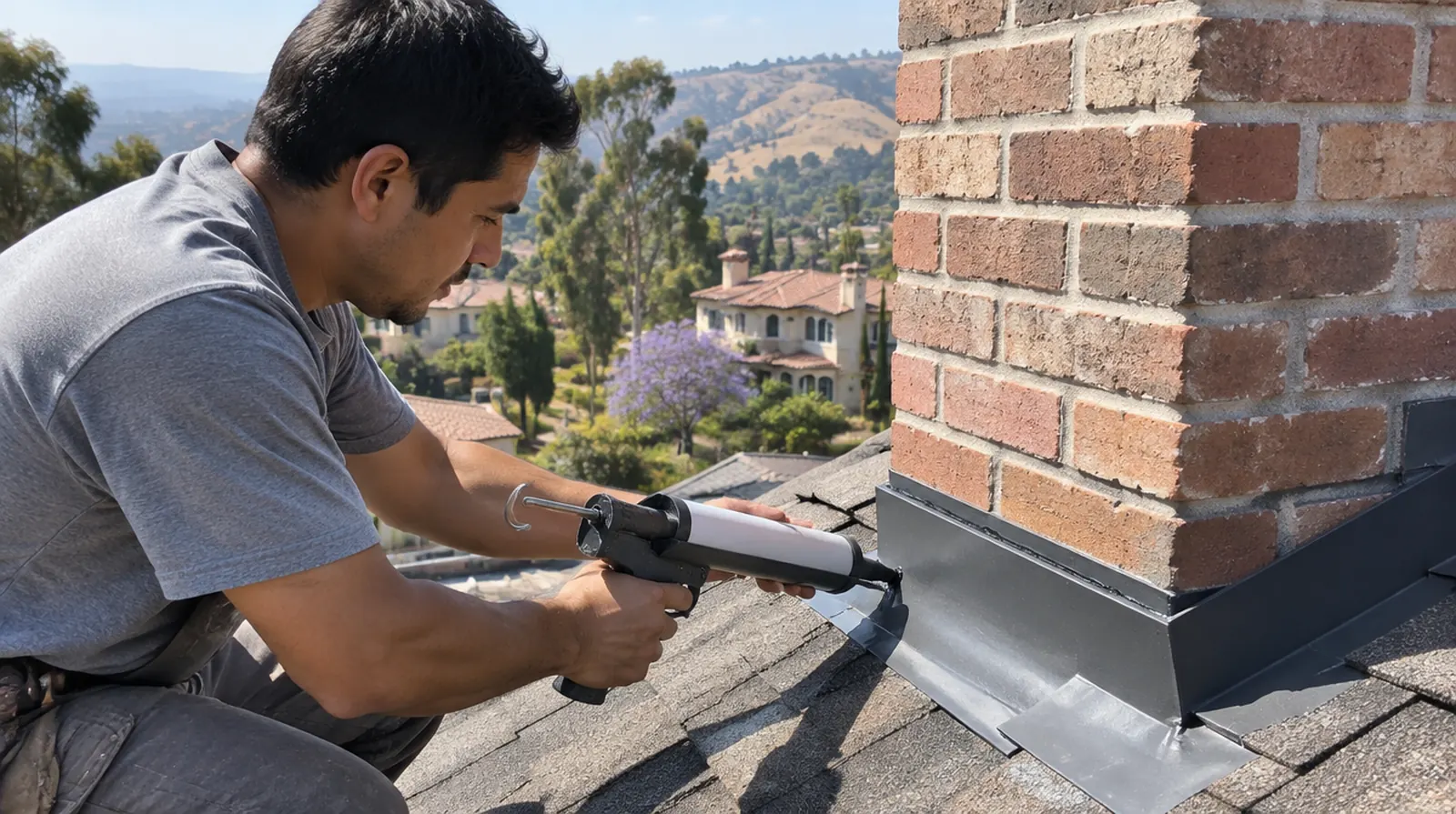
Tracing comes first in roof leak repair
On multi-level hillside homes, water can enter at an upper roof, travel along framing or behind stucco, and appear on a ceiling one level down. On tile roofs, water can get past a cracked tile, run down failed underlayment and drip far from the entry point. That is why patching over the obvious spot rarely works.
We start inside, noting where the stain is, how large it is and when it appears. In the attic, we follow water marks uphill. On the roof, we inspect likely entry points along that path, including walls between roof levels. When needed, we water test one section at a time to confirm the source. For more on this approach, see this article on stopping a stubborn roof leak.
Where Diamond Bar roofs usually leak
- Walls where an upper roof level meets a lower one
- Failed underlayment beneath concrete tile
- Valleys packed with eucalyptus debris
- Chimney and skylight flashing
- Cracked vent pipe boots
- Solar mounts without proper flashing
- Patio cover and deck roof connections
How we fix the leak
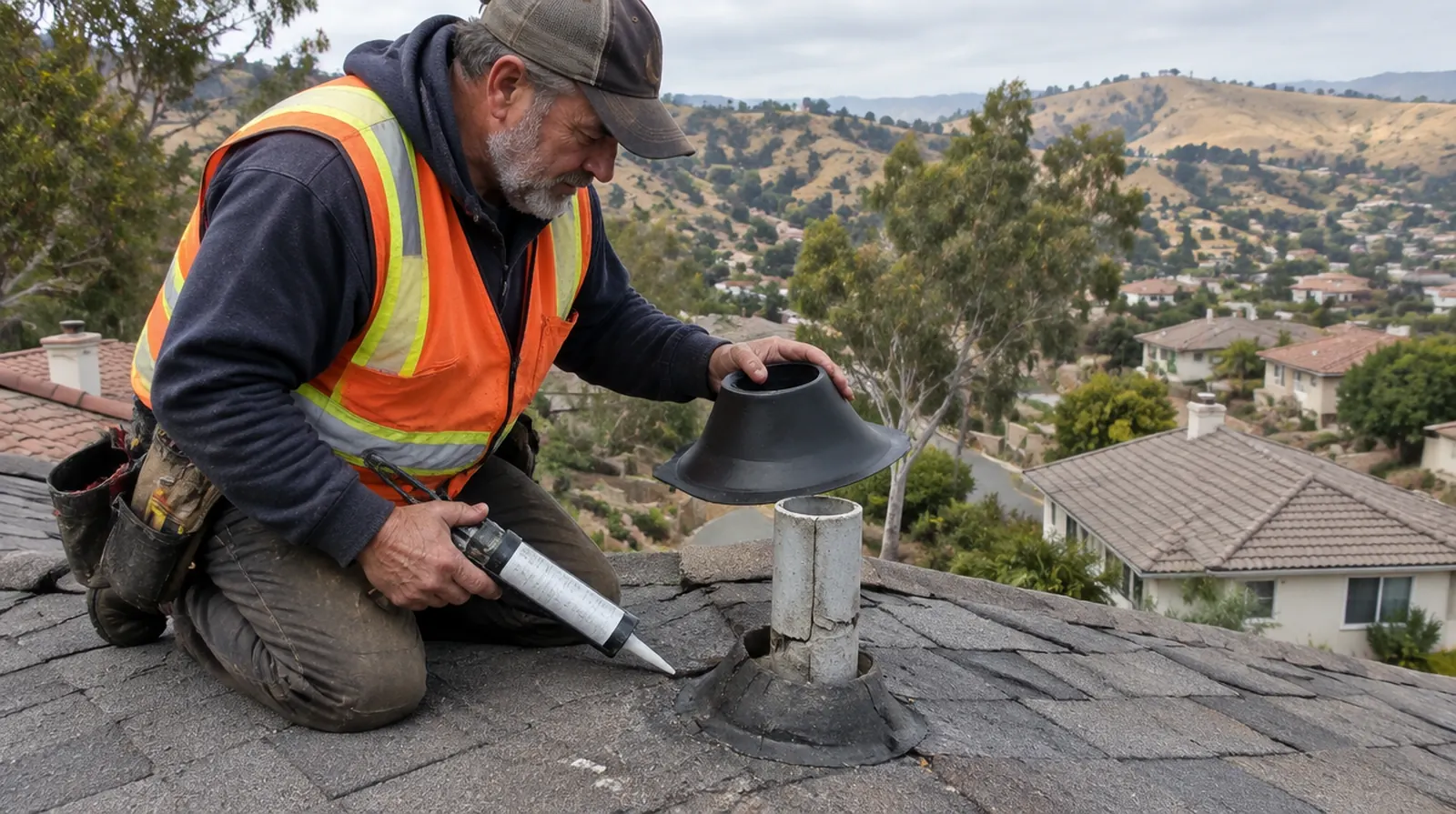
Once we find the entry point, we open the area, inspect the underlayment and deck, and replace anything that is soft or damaged. On tile roofs, we lift tile carefully, replace failed underlayment and flashing, and reinstall the tile. On shingle roofs, we replace damaged shingles and install new flashing. Vent boots are replaced rather than coated with sealant.
If the leak is part of broader wear, our roof repair service handles the surrounding work. If underlayment is failing across the whole tile roof, we will explain whether a tile reset makes more sense.
Why leaks appear with the first storm
Long dry months hide problems. Sealants crack, underlayment ages and flashing loosens without visible signs inside. When the first heavy storm arrives, water finds all those weak spots at once. A check before the rainy season can catch them early.
What to do while you wait
Place a bucket under the drip and move furniture and electronics. If the ceiling is bulging, a small hole at the lowest point lets water drain safely. Take photos and note when the leak appears. Please do not climb on a tile roof yourself; it is easy to slip and break tile.
Leaks at walls between roof levels
The single most common leak source we find in Diamond Bar is the wall where an upper roof meets a lower one. Water from the upper slope runs down the wall and has to be carried onto the lower roof by step flashing and counter-flashing. When those pieces are missing, too short or rusted, water slides behind the stucco and appears on a ceiling or around a window frame below. Rebuilding that flashing properly, sometimes with a new kick-out at the bottom, usually ends the problem for good.
How long a leak repair takes
Most leaks are found and fixed in a single visit. Larger deck repairs may need a second day.
Keeping records
We send photos of the problem and the repair. They help if you sell the home or need to show an insurer what was done.
Leaks around skylights
Older skylights often leak at the curb flashing or through failed seals in the unit itself. We test both, then reflash the curb or recommend replacing the skylight if the frame is the source, so you are not paying to fix the wrong part.
Roof leak repair FAQs
Why does my roof leak only in some storms?
Wind direction matters. Wind-driven rain can push water past flashing and tile edges that stay dry in calm rain.
Do I need a new roof?
Usually not. Most leaks come from one failed detail.
Do you repair ceilings?
We repair the roof. Drywall and paint can follow once it dries.
What if it leaks again?
Call us. Some roofs have more than one entry point.
Have an active roof leak?
Call (909) 324-6458 and tell us what you are seeing. We will set a time to trace it.